A powerful message attributed to Pope Leo XIV regarding Donald Trump has sparked widespread discussion, as its words focus not on political battles, but on the deeper responsibilities of leadership, humility, and service.
The message immediately drew attention because of its emotional tone and its call for leaders to look beyond authority and influence. Instead of focusing on confrontation, the statement centered on the values that define true leadership: compassion, honesty, patience, and the ability to understand those being served.
“My child, true leadership is not measured by power or a loud voice, but by humility, truth, and the willingness to serve others,” the message stated.
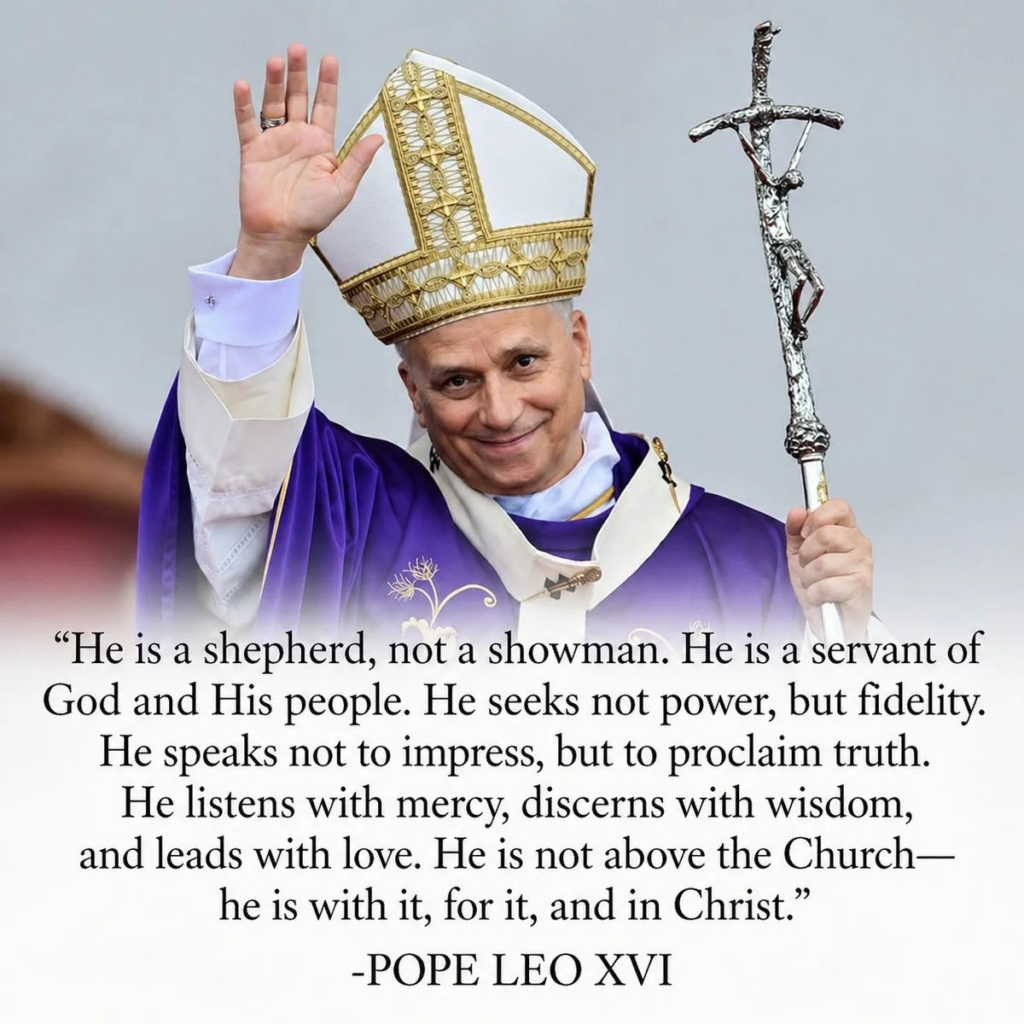
Those words quickly became the central point of conversation. In a world where political debates often become dominated by conflict, criticism, and division, the message offered a reminder that leadership is ultimately connected to responsibility.
The statement continued with a reflection on the importance of truth, warning that when words lose their foundation in honesty and actions create separation rather than unity, society must take a moment to reconsider its direction.
“When words lose their foundation in truth, and actions begin to divide rather than unite, we must stop and reflect,” the message said.
The idea struck a chord with many observers because it addressed a challenge faced by leaders across generations: balancing power with responsibility. A position of authority can provide influence, but the message emphasized that influence alone does not define greatness.
According to the statement, a leader’s role is not simply to speak, but also to listen.
“A leader is called not only to speak, but also to listen — to understand the struggles of the people, and to carry them with compassion and responsibility.”
That message highlights a fundamental expectation placed on public figures. Leadership is not only about making decisions or defending positions; it is also about recognizing the experiences, concerns, and challenges faced by ordinary people.
The statement also made a distinction between disagreement and division. It suggested that differences of opinion are a natural part of society, but a dangerous distance can develop when those in power become disconnected from the people they represent.
“What concerns me is not disagreement, but the distance that can grow between authority and those it is meant to serve,” the message said.
Those words created a broader conversation about what people expect from leaders in times of uncertainty. Many believe strong leadership requires confidence and determination, but the statement emphasized that strength must also include empathy and understanding.
The final message delivered a simple but powerful reminder:
“Strength is found in kindness, wisdom in patience, and greatness in service to others.”
The closing words transformed the discussion from one focused on a single individual into a wider reflection on leadership itself. The message presented a vision where success is not measured only by victories, popularity, or control, but by the ability to serve others with dignity and compassion.
Throughout history, leaders from different backgrounds have faced the same challenge: how to use authority responsibly. The statement’s focus on humility suggests that leadership is not about standing above people, but standing alongside them.
For supporters and critics alike, the message represents an invitation to think about the qualities that truly matter in those who hold positions of influence. It shifts attention away from personal conflicts and toward larger questions about trust, responsibility, and the relationship between leaders and the communities they serve.
As discussions continue, the words attributed to Pope Leo XIV remain a reminder that leadership is ultimately judged not only by what is said, but by how those words are transformed into actions.
Power may attract attention. A loud voice may command a moment.
But according to this message, lasting greatness comes from something far quieter: humility, truth, compassion, and the willingness to serve.
