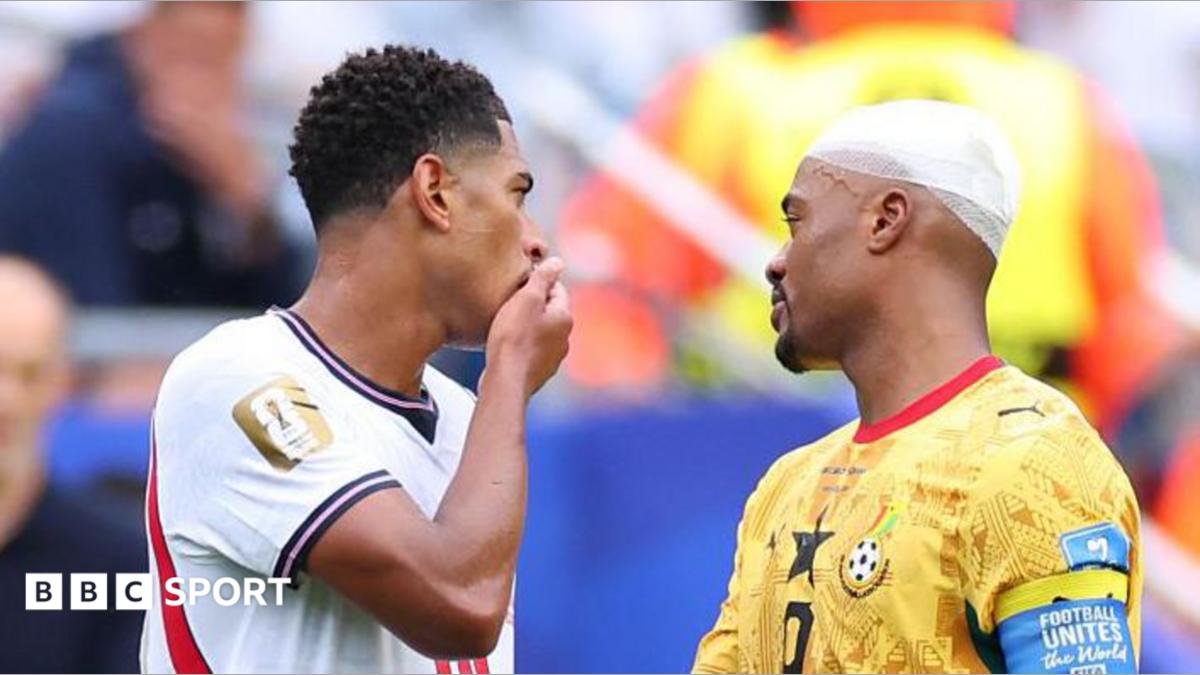
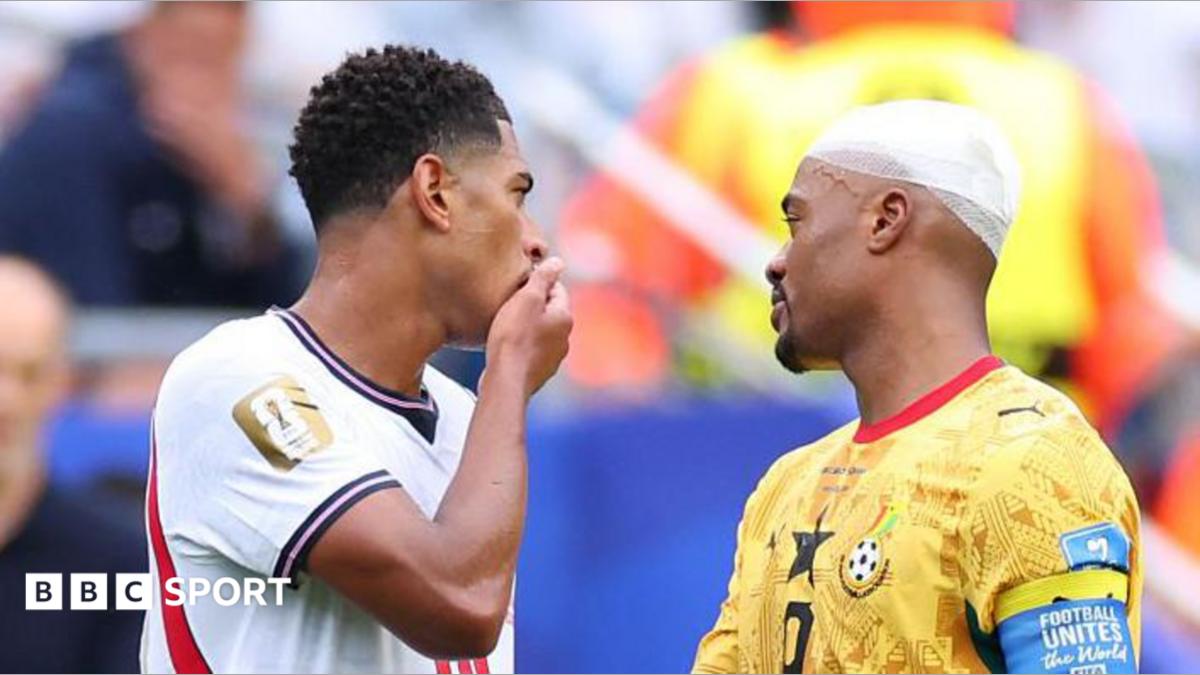
A new law introduced for the 2026 World Cup allows referees to send off players who cover their mouth while speaking to an opponent during a confrontation. Paraguay’s Miguel Almiron became one of the first high-profile casualties of the rule, receiving a one-match ban after being dismissed under its terms.
Fifa’s head of referees, Pierluigi Collina, was clear about the boundaries of the rule before the tournament began. “Players can continue to cover their mouth with an arm and the shirt because they may chat with friends,” Collina said. “It’s normal to chat before, during or after the match. So if the conversation is a friendly conversation, they can continue to do it without any problem. When the conversation is confrontational, covering the mouth means that you are doing something very wrong, potentially, and the sanction is the red card.”
Almiron’s dismissal came after Paraguay’s Isidro Pitta went to ground claiming a bad challenge by Turkey’s Ismail Yuksek, sparking a melee between the two sets of players. Almiron, close to the incident but not directly involved in the pushing and shoving, covered his mouth while talking to Turkey’s Mert Muldur during the heated situation.
Fifa president Gianni Infantino addressed the rule following Almiron’s dismissal. “This thing about covering the mouth is for us a very, very important rule,” he told SNTV. “It’s about respect. It’s about the example that we should give.”
Context remains central to how the rule is applied. Throughout the tournament players have regularly been seen talking to each other while covering their mouths without sanction — as has been the case with referees themselves. The distinction, as in the case of Jude Bellingham and Andre Ayew where no animosity was present, is that a friendly exchange carries no punishment.
Image credit: BBC Sport / BBC Sport
